Could driverless trams come to your town or city? (England)
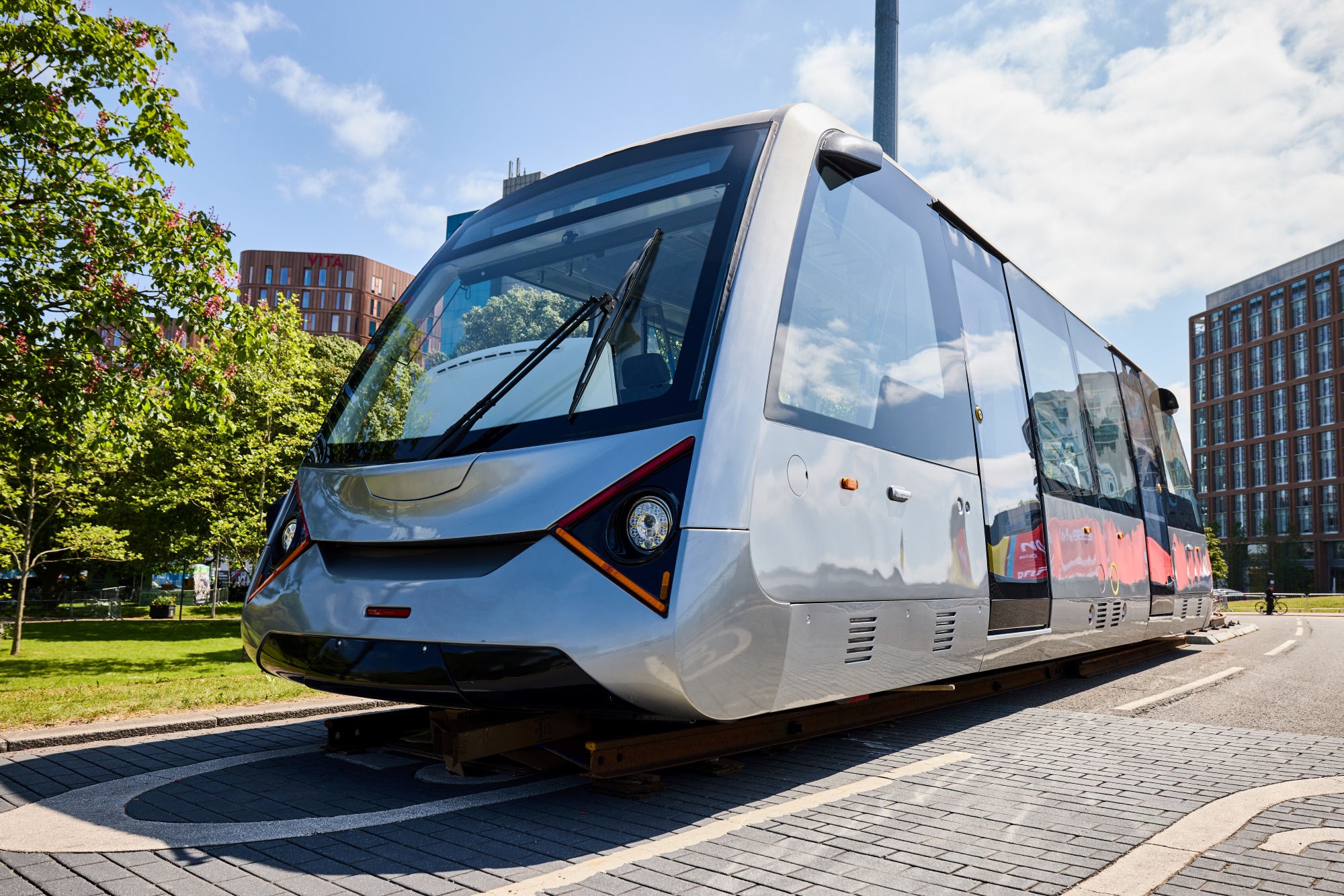
What is Very Light Rail?
Rather than the train-like systems
we currently see in cities like Manchester and Birmingham, VLR involves single,
battery-powered cars that can each transport around 50 people.
At first, they will require drivers
– but the aim is for the system to be autonomous.
Tram cars will be recharged
regularly, rather than relying on overhead power cables or electrified lines
seen on other transport systems.
Why not just use normal trams?
For medium-sized cities like Coventry, full size tram networks are simply
unaffordable.
One of the main reasons it could be
more cost effective is that the VLR system requires engineers to dig just under
1ft (30cm) into roadways – compared to around 3ft (1m) for traditional trams.
This means there is rarely any need
to interfere with underground utilities, significantly reducing costs and the
amount of time it takes to install.
There is also no need to electrify
routes, making the technology much cheaper.
Why is Coventry doing this?
The idea was originally formulated by the Coventry City Council as a way of
linking up the city with the proposed HS2 stop in Solihull.
Trams were seen as a possible
solution but, as well as the cost, the city's layout was seen as prohibitive.
However, since then the system has
shown potential to be a cross-city transport solution instead, but will need to
secure funding in order to be delivered.
Previous iterations of VLR systems
were not suitable for use in urban environments. But new technology changes
that by using special weight bearing concrete slabs and vehicles specially
designed for tight corners.
How much has been spent on the
project?
A total of £32.1m of public money has been committed to the project since it
was first publicly discussed in 2017.
Around £26.5m has been spent to
date, with that funding being provided by the Government's Department for
Transport via the West Midlands Combined Authority.
The money has been spent on
developing the vehicles at a facility in Dudley, as well as the track
technology.
Why aren't other cities doing
this?
The main reason this hasn't happened before is because the technology to make
it hasn't existed.
Ironically, it's now been made
possible by a mode of transport it could partly replace.
Is it environmentally friendly?
Adding to the technology's appeal are the potential environmental benefits as
cities look to cut emissions, as well as costs.
Firstly, introducing a tram network
should reduce the amount of vehicles on the road - assuming it is well used.
While there would be some
environmental impact associated with the production of the batteries and the
wider system, those responsible for delivering VLR believe its green
credentials are still strong.